R-Everies

-Junrui Leng-

Hi, welcome to my world of art explorations.

This site collects and organizes my writings on art from the past two years —— including book reports, exhibition reviews, and critiques. I hope you enjoy a relaxing and inspiring journey here.

Modern and Contemporary Art & Life mode

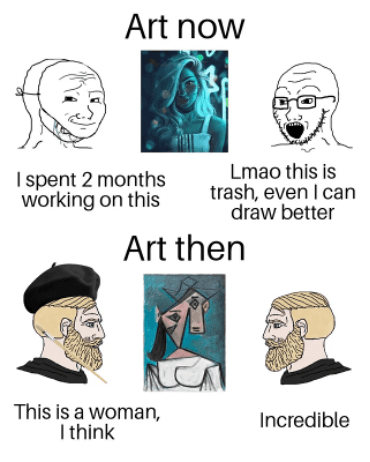
"I can't see what this work is about." This is a common category mistake many people make when facing modern artworks: they are trying to find the reference of the brushstrokes, colors, and geometric shapes in the objective world, which in fact, are only expressions of concepts. Visual analysis is essential to understanding modern art: only by carefully analyzing the elements in paintings and comparing them with classical art can we discover what modern artists are trying to express in their works.

现代艺术作品示例
A meme that satires modern art… But I believe such comparisons are the basis of understanding them!!

It is not a difficult process. Many people approach modern art by first learning about the background and the artist's philosophy, but this order makes modern art complex and inscrutable. This is a method of studying history, first telling the overall background of an era, and then telling about events happening in between. However, I personally believe that this approach should not be applied to understand modern art, or the study of any art: we shall see the Mona Lisa first, then Leonardo da Vinci, and finally the Renaissance. No matter how profound the ideas it contains or how complex the background is, modern art is first and foremost an art piece. No matter how much effort the artist has made, in the end, all the goals and thoughts are condensed into the work and should be expressed by it. Therefore, to understand it is to see the art piece first: a thorough analysis of the painting, and then its context. Analyze art from the perspective of art, and then enter art history, not the opposite. The former is the way to "perceive" rather than "see" art, while the latter is the way to summarize art.

抽象艺术细节
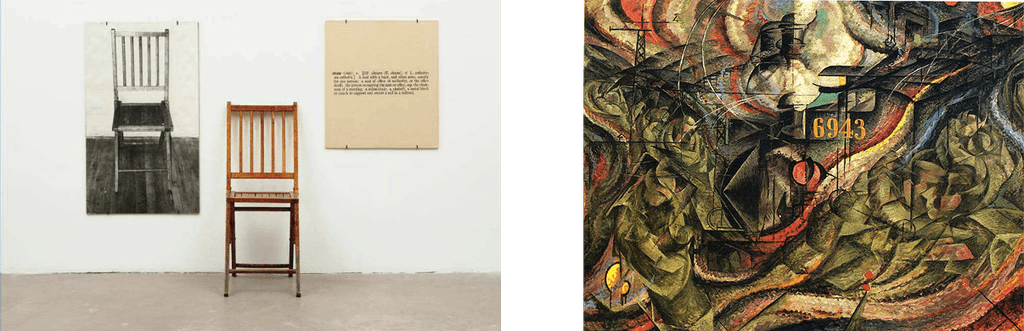
Left: One and Three Chairs (1965) by Joseph Kosuth Right: States of Mind: Those Who Go (1911) by Umberto Boccioni

For those learning about modern art for the first time, it is worth noting that modern art is a collective term for the art of a specific period, a product that is distinct from classical art, which encompasses hundreds of genres, rather than a particular school. Just as we won't praise every British 18th-century writer as a master of literature, thinking that one modern art school is very interesting, and the other is simply opportunistic, only means a difference in aesthetic taste. You could satirize Maurizio Cattelan's Comedian—since everyone could stick a banana to the wall with tape—and praise Joseph Kosuth's precise yet thought-provoking expressions about the distance between signifier and signified in One and Three Chairs. Or maybe you simply can't resonate with any conceptual art, but when you see Umberto Bociuni's State of Mind: Those Who Go, you are curious about how artists break down real-life objects into pieces and intricately reconstruct them.

Modern people who are stuck in the hustle and bustle of urban life have little and fragmented time, and crave speed and productivity to increase the "length" of life. Works such as "empty oneself", "deep reflection", "in-depth communication", etc.—these time-consuming jobs that do not offer definite and visible results, which determine the breadth and depth of life, are put on hold. Among these, "in-depth communication" may be the easiest to achieve, because it requires two subjects to interact with each other, not a single person's self-analysis. Through communication, people can initiate a topic in a short period, sort out the information they already know, express it, and recognize different thinking patterns and their own limitations while accepting others' views and feedback during further communication. If continuous absorption of information and reflection can increase the depth of people, communication can expand the breadth of people.

By talking to people, people can come into contact with different modes of thought; through reading, people can gain knowledge; stepping into nature, you will feel the growth of those natural creatures; Through music, a person can enter a purely abstract space and have an emotional response in the body...... What about appreciating a painting? Communicating with the viewer is just one of the purposes of many modern art schools: with no explanations or elements connecting to real life, the purist and the most artistic part of visual art could help the viewers to reflect.

When you listen to a piece of music, you may not be able to construct anything in your mind, but the emotional response can immerse you in a different atmosphere. The same is true for modern art: look first, let your emotions go first, and see what the artwork "says". In the process, there is a high probability that you will begin to understand modern art and complete this enlightening exchange.

During my past 2 years studying art history, modern art took me through this exchange. Will Gompertz's approachable and emotional analysis taught me the perception of art; Modern and contemporary art exhibitions taught me to perceive artworks in the "first scene" through the space that resonates with the artworks. I've also studied with a contemporary artist, through art practices, I have gained a better understanding of how artists incorporate their thoughts into their artworks. In the end, only by staring at the Wikipedia interface "Composition 7" and thinking about the content of this painting, I could understand what Kandinsky was referring to by the music depicted in the picture. So, with these works of art, I came into contact with the way of life philosophy presented by my predecessors in their paintings, and even their life patterns. Two years later, looking back at all this, I finally understood what modern and contemporary art gave me - the ability to observe and communicate deeply, to understand the life patterns of oneself and others.

Book Review

—How to see?

12/2024

Book Review for What Are You Looking At? The Surprising, Shocking, and Sometimes Strange Story of 150 Years of Modern Art

This is an excellent primer on modern art. After reading it, you will instantly understand why there are so many unusual "works" in the Museum of Modern Art—because you will have learned about their origins, its development, and the reason behind the name of every master or work you may have heard of. In those humorous narrations, you finally understand: Oh, it turns out that the author thinks so. Whether you finally realize the logic of those arrogants, or the "subtlety" part of modern art, you can confidently say: I have read about the chaos and disorder of Dadaism, the subconscious and collective unconscious in Surrealism… You can be called a master of modern art.

However, I think the most important thing it tells us is that modern art is not the works of the masters in a textbook about modern art history. The content recorded in books is only a part of modern art, but modern art is not limited to a few "-isms" and personal names.

Modern art should be a spirit of pursuing the origin. The artist uses all means to get rid of the functionality of classical art in pursuit of purity and authenticity. They didn't know what it was, nor did the audience. But Delacroix tried to turn his attention to the history that was happening in the real world, Courbet portrayed the lives of the people at the bottom, Monet, Renoir, Degas and other artists, trying to paint the dynamics of the real world on a canvas defined by the secular world as "casting eternal materials"; Then Cézanne discovered the secret of our ability to see multiple perspectives at once...... After that, they discovered their own identity as creators and linked their works with their hearts, such as Matisse using paint to sprinkle his inner mood swings, while pursuing pure art, such as Kandinsky playing a symphony on canvas with color blocks and lines. With their theories and a strong heart (at risk of being scolded by critics and the public), they began to move from portrayal to creation, and eventually became people who created art. In the era of continuous war and rapid social development in the twentieth century, some artists tried to use art as a sword to stab the chronic diseases in society and even the world: the "Dada kitchen knife" cut out the "true rules" of the world, and the pop artists ridiculed consumerism...... Behind the terms of "so-and-so" is the output of a school of views and spiritual power.

Many people say that there are no masters of art after Impressionism. If art is defined by whether the artwork successfully expresses the author's personal pursuits or emotions, the last 150 years marked the development of "real visual art". Walter Benjamin's The Work of Art in the Age of Mechanical Reproduction is valid in modern art context: the aura of artworks have been greatly diminished, which is even more pronounced in art in the 1960s and beyond. However, this is not what modern art wants to pursue: it wants to evoke a certain layer of feelings in the viewer's mind about the content of work and things outside it through various media (paintings, installations, and even the artist himself—for performance art), which is more like a psychological experiment and philosophical practice. Creators create with an inquisitive spirit, and also expect the audience to explore a spirit based on their works. Thus, in my opinion, when we look at the so-called "history of modern art", we don't have to memorize a lot of names or schools, but look at the artworks: what elements are on the canvas, what I can feel, what he might want to say in light of his time, and what did the artist express. This mastery of the spirit of exploration and feeling is what modern art really wants to teach us.

For this reason, modern art is spiritual art, and should not be limited to the narrative of "art history". In the past 150 years, modern art was highly personal and highly interactive in the communication between artists, artworks, and people. The level of conceptuality and whether the material fits in with the topic is far more important than the "aesthetics". It is precisely for this reason that the conventional narrative of modern art history is only a context used to understand its development. Outside of this context, "art about viewpoints" that began to emerge in the past 150 years, or even earlier, can also be classified within this scope. Not only male and female artists in Europe and the United States, but also artists from other regions, as well as the practices of other people who are not given the title of "artist", can be counted as this spiritual art.

In this book, the author repeatedly mentions the missing female roles in the narrative of modern art history: the impressionists Morisot and Cassatt, the Dadaist Hannah Hawke, Frida Kahlo(I believe classification of the artist's school should follow their hearts, so Frida is only an artist herself, not surrealist!), and so on. They are creators influenced by the perspective of this genre, and they are still relatively marginal in modern art history even today, when the cause of gender equality is constantly advancing. But they are not the only ones: in the broader perspective of the world, there are many people making spiritual art attempts at the same time: they may have been influenced by the mainstream narrative, or they may have existed in another system, and they should be seen. At the beginning of the twentieth century, Hilma af Clint created a large number of texts and geometric patterns in spiritualism, scientific inquiry and exploration of nature, and said that her works would not be made public until twenty years after her death. It was almost not until 2018 that her work entered the public view when the Guggenheim Museum held her solo exhibition. If we borrow the narrative of modern art history, her works are ahead of artists such as Kandinsky and Mondrian, and contain a large number of abstract art-like content, and modern people can also feel the unique mysterious power in her works. In the East, also at the beginning of the twentieth century, Pan Yuliang's paintings cleverly integrated the characteristics of Western modern art with Eastern aesthetics. In addition to them, after breaking down the barriers of field, region, and gender, we can still perceive this spiritual power, which is enough to achieve the aim of modern art.

Therefore, when we finally finish reading this book, or when we are reading this book, please look carefully at the illustrtions, or go to the Internet to search for the pictures of the original work, even go to an art museum later to see the original piece; please put the artwork in front of you, and the smaller the space barrier you have, the better your experience will be; please feel this medium carefully, please think deeply and communicate with it. And, when you see a work of modern art that you have not seen in a textbook and does not belong to any famous master — even if it is irritating at a glance with only a few rough strokes — try to feel and understand, and try to take this opportunity to feel the message you can feel.

Please respect, think about, and criticize them as other people's view in real life.

PS: If you're worried about being cheated out of money by the Museums of Modern Art, this is also a good way to maximize your interests: In the 21st century, in the era of "entrepreneurial art", just take this trip as a spiritual journey.

Modern & Contemporary Art Exhibition Review

—Space, art, communicate with other's life mode

I love the verb "visit" in the phrase "visit an exhibition". Visit has two meanings in Collins: 1. If you visit someone, you go to see them and spend time with them. 2. If you visit a place, you go there for a short time. I believe the meaning of "visit" in "visit an exhibition" stays between these two definitions: people SEE the content in an exhibition, spend time with the exhibits, and use this time period to establish a complete feeling of art. These articles below are the reflections of exhibition experience rather than exhibition comments: about the feelings I had in between the spaces and artworks, and an attempt for immersive appreciation.

Li Yang's solo exhibition: Dream Transformation

October 2023

Exhibition Info:

Name: Li Yang's solo exhibition: Dream Transformation

Location: CAAArt Museum

Time of visit: 2023.10

Duration of visit: 40min

"When you are surrounded by dreams…"

Dream Transformation

With almost zero knowledge of dream-related subjects, such as psychology or philosophy, I came to the "Dream Transformation" exhibition with the mindset of "savoring modern art with unique ideas", which turned out to be a corridor above the museum. The space of the exhibition and its peculiar layout alone are cool, I thought.

The author Li Yang shows his countless dreams, analysis, and reflections about the dreams in the exhibition. He preserves dreams in the form of words and paintings, expressing the spiritual world within people. His dreams are full of color and surrealism, and the dreams of others he records are also intertwined with reality and illusion: while the black line of reality development is combined with the yellow line of dream research, the author's 33-year history of research on dreams is told within tens of meters.

I always feel that dreams or subconscious minds are more or less a reflection of what people experience in reality and what they hope to experience. So in the process of watching those works, I tried to imagine the story of the author and the people he interviewed through these scenes. Imagine the richfulness of the author's life that had shaped in such grand and wonderful dreams, as well as the life trajectory of those interviewees and their psychological state. But those dreams or subconscious minds are so peculiar that I can't help but start thinking seriously about "past life dreams", "collective subconscious", "innate cognitive forms" and other theories for the first time, and even the hypothesis that "dreams are prophecies". Is the end of scientific research on dreams the verification of many philosophical assumptions, and even the beginning of "metaphysics"? I couldn't help to think.

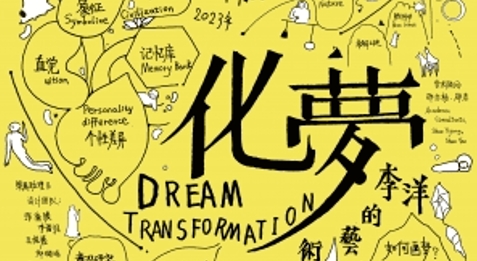
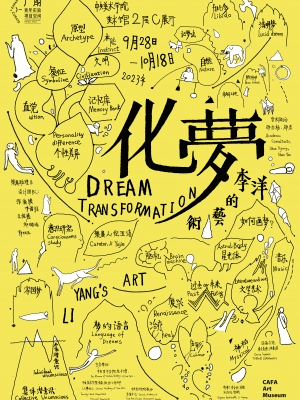
What impressed me the most was the introduction to the history of human dream development on the right side of the entrance. It was a "timeline" with a yellow background, and characters like children's handwriting wrote the history of the development of dreams on paper. But it is not a timeline, but pieces of information and simple illustrations, and the details in each time interval are hazy and disorganized within the approximate chronological range. Here, with words, countless fragments are put together into the historical trajectory of dreams. It is like a grand dream for all mankind.

Wandering in the corridor of more than ten meters long for 40 minutes, it also seemed to me to be a dream: a dream with the author, and with his interviewees...... A dream with all of humanity. In the corridor of more than ten meters, I could resonates with countless human beings and countless "history and prophecies" —

And listen to the echo of this sound of dream in my heart.

plus: Another reflection is about the envy of the author. Mr. Li should be a person who can sleep quickly, dream often, and remember dreams, so that he can record his dreams, and can still dream and record dreams normally when sleeping with a detector. But the dream I finished left almost no trace in my mind, only vague fragments would be left, and there was no such thing as saving, coupled with severe sleep anxiety, I basically couldn't quickly enter deep sleep...... I envy his ability to dream and record dreams.

Eternal Spiral IV—James Jean

November 2024

Exhibition Info:

Name: Eternal Spiral IV—James Jean

Location: Today Art Museum

Time of visit: 2024.11.7

Duration of visit: 2.5h

Words cannot describe the beauty of the soul.

"After I moved to the United States when I was 3 years old, I had a big gap in my understanding of our family's family roots. It is as if we are a severed limb transplanted into a foreign body...... But slowly, as I continued to create more and more works, the lines in my work, the way I painted naturally, seemed to lead me back to the East. "

On the exhibition opening ceremony, Jeams said.

In my eyes, this exhibition is the embodiment of this entire process: from art learner to creator, to a modern artist who truly blends the beauty of Eastern and Western art in his works, all the results of his creations and their various forms – sketch, painting process, painting, sculpture, animation...... Jane seems to have a whole fantasy world in his mind, and he can transform these imaginations into two- or three-dimensional entities.

4th Floor - Basis: manuscripts & color & brushstrokes

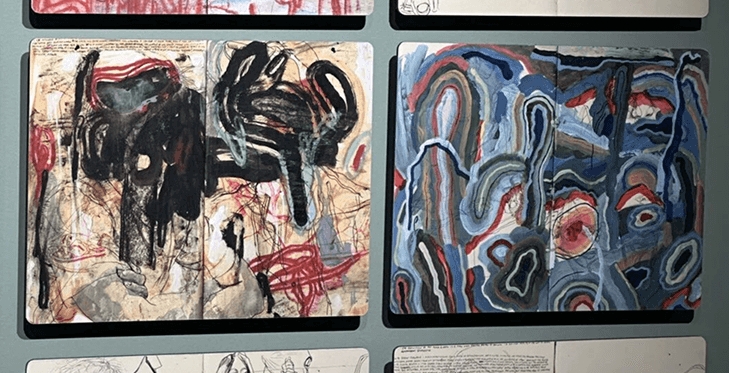
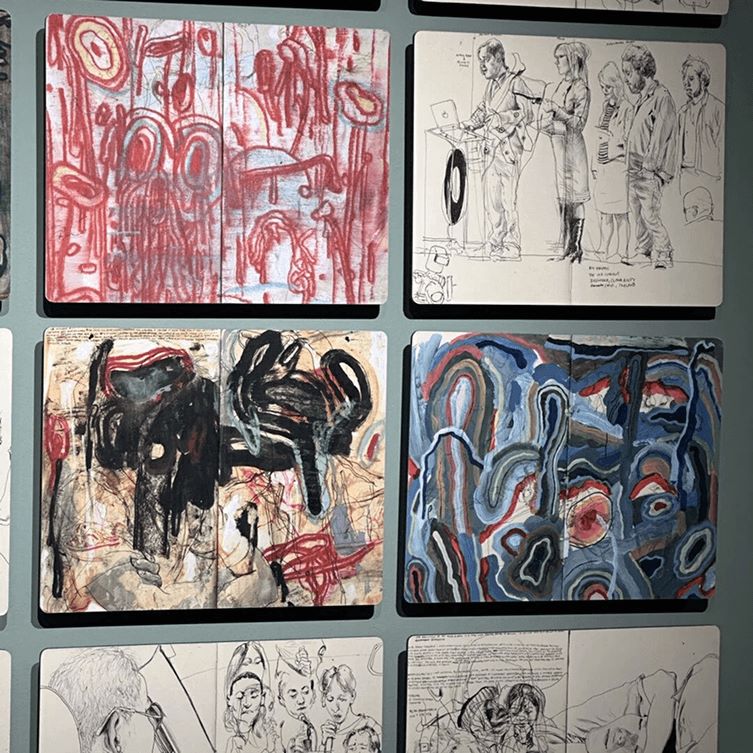
In the first part of the exhibition, "Origins", the artist's sketches and drafts over the past 20 years, as well as the daily painting process, are exhibited. These are not the materials that have been promoted by the countless exhibitions of "Eternal Spiral IV", but they account for such a large proportion. During the 2.5h visit, my friends and I spent more than half an hour looking at these drafts: hundreds of small paintings - sketches, short stories, fairies, abstract works...... From printed photographs to pencil manuscripts, thousands of lines and water stains are woven together to create one or two amazing things that we call the artist's masterpiece.

What does modern art look like? Many people believe modern art is too abstract; radicals say that "there are no masters after Impressionism"; Some people say that they can only understand those works of art that are exquisitely designed and brilliantly created. And I think modern art is the art that can truly "show the human spiritual world". Instead of depicting the known world, the artist turned to the realm of abstraction. For artists who are "creating" in the 21st century, no matter what they are creating, their goal is to depict their spiritual world, to reflect their understanding of the world and themselves as unique individuals in the form of art.

When visiting exhibitions in museums or galleries, we see a wide variety of paintings, installations, sculptures...... They originated from the known world, but does not refer to anything specific about it. How did the artist come up with such a fantastic composition? I often have this question when appreciating the works of modern artists.

Audiences usually only see the final result. But only through these manuscripts can we feel the author's "artistic vitality": through those casual and lively brushstrokes, we can see the whole process of the author turning into an artist from a skilled painter. He depicts a wide range of things: from sketches of everyday life to TV series to magical creatures, using all kinds of themes, all kinds of techniques, all sorts of styles. After seeing these drafts carefully, the magnificence of his masterpieces can be seen at a glance, without the need for a lot of text explanation.

In addition, this floor also displays the author's digital painting palette, creating video, studio style (as shown below), studio introduction video and other "foundations of art creations". Through a whole layer of foreshadowing and introduction, the modern artist's creation is no longer a castle in the air, but a concrete thing that every modern person can feel and understand. No matter what fantasy works he created in subsequent exhibitions, as long as we have seen his "way of coming", we will not be confused by the fantasy nature of his content.

3rd Floor - the double helix of DNA

"The contemplation of the history of painting and the dialogue between history and self through painting are like the double helix of DNA in his art, snuggling and rotating with each other." However, I didn't focus on how the author combines myth and self, but on his creation of works with different textures under the same theme.

In the "Trace of History" section, I saw his final work: a large number of acrylic paintings on canvas, as well as small sculptures and animations derived from graphic paintings. After experiencing the psychological preparation of the previous layer, the final "output" still surprised me: it turned out that the finished product was so large, the author had retained all the as acrylic water marks intentionally, and the traces of artificial painting could give the viewer a more intimate emotional experience than the digital painting version...... So, the finalized version would be like this.

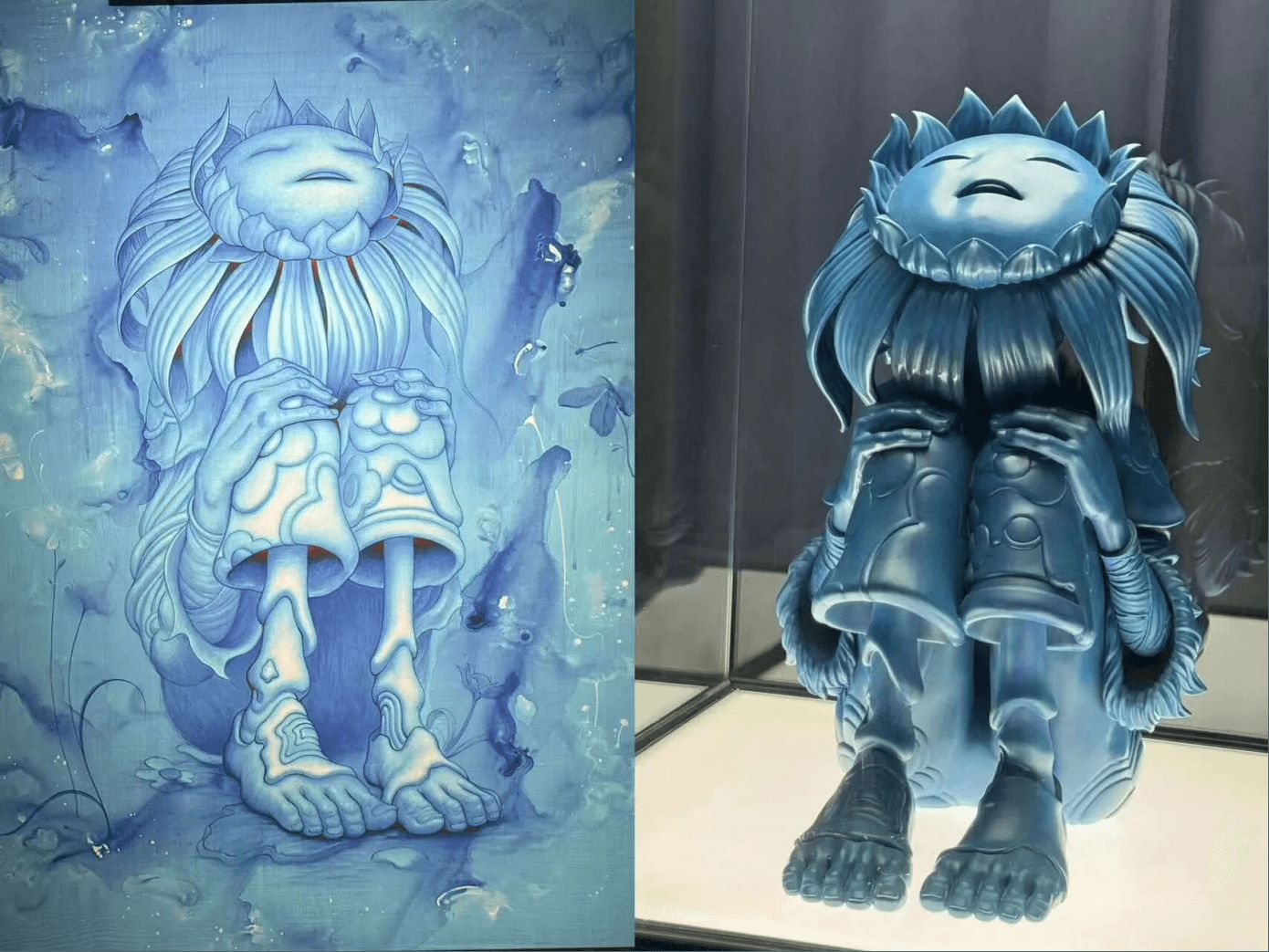
But that's not all. I think that in addition to his dreamy imagination, what I love most about his works is the diversity of his works. As a sculptor and painter, he could bring two-dimensional things into the three spaces like Ma Liang(a character in Chinese folk tales, who could make his drawings real). "Sunflowers" is one of my favorite works in this exhibition. The author was inspired by the story of the flower prince Xochipilli in Aztec mythology to create this work. Concisely said, "He (the flower prince in the painting) is waiting for the flower of his soul to bloom in the light." The acrylic version is full of clear and translucent sky blue, which caught my eye at once. After seeing its sculptural version, I felt completely different: oh, it turned out that the sculptural version was blue. The feeling of the light flower kingdom disappears in an instant, replaced by a deeper, solemn mythical beauty. The animated version of "Sunflower" brought me a whole shock: the flower prince turned into a flower bush in the process of longing for the warmth of the sun, and after the flowers gradually faded, his most ontological appearance was presented, quiet and serene, like a child curled up in the mother's body. It seems that the magic of nature has allowed him to complete the baptism of body and mind. In different forms of "sunflower world", the same thing is interpreted from different angles, as if this dream-like world has really existed.

2nd Floor - Pantheon

"What an exaggerated name, even if the author is strong, calling his work like this is a bit narcissistic." This is my first reaction after seeing the title of this layer. The volume and texture of large sculptures give people a sense of grandeur, but they are not enough to be called gods. What exactly made the author decide to use this magnificent name? Before I knew it, I had walked through the sculpture area and reached the second area of this floor. At that moment, I finally understood what a pantheon was.

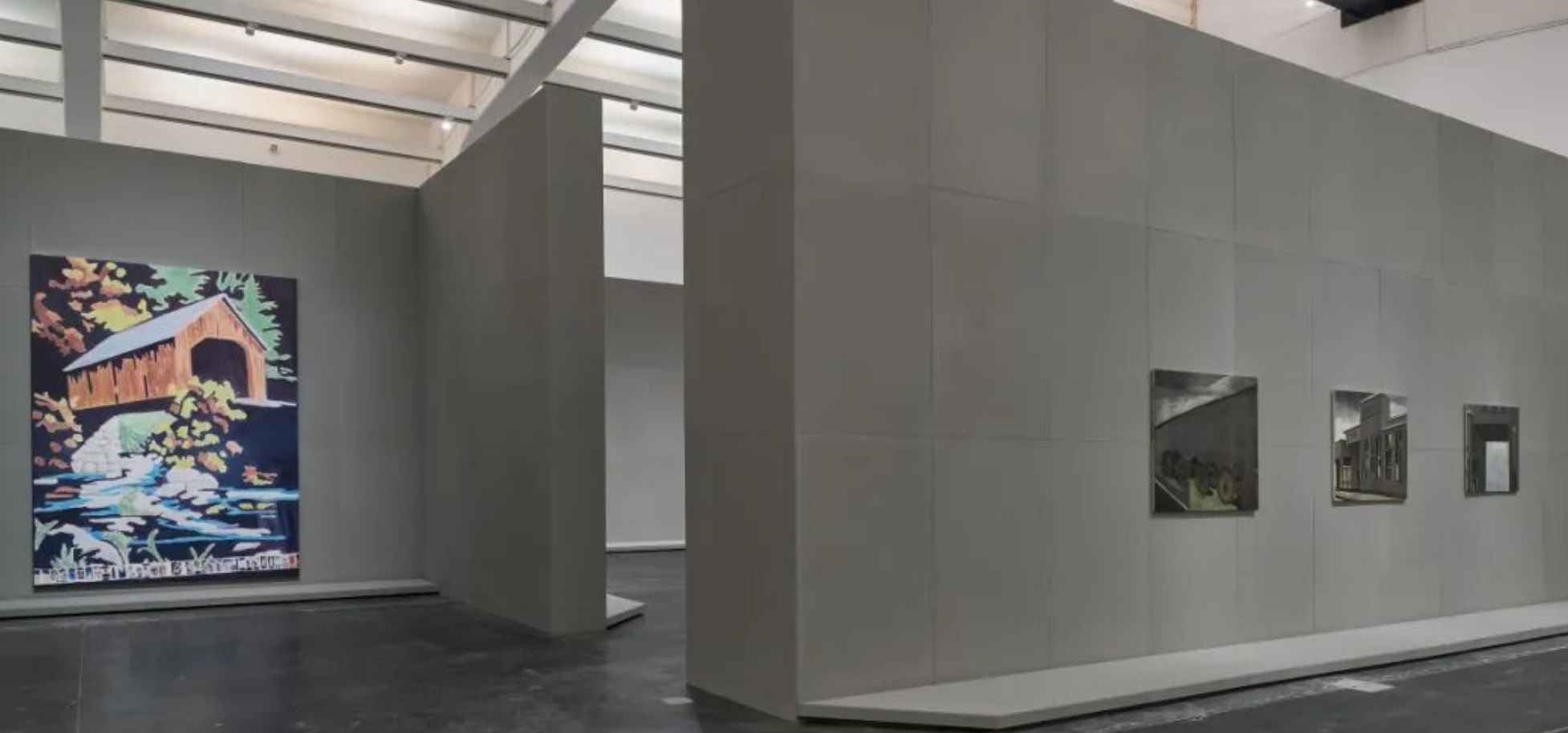
In the vast white space more than ten meters high, every sound is echoed infinitely, and every footstep is infinitely amplified; Huge picture scrolls are displayed. The exploration and progression of individuals, the magnificence and vastness of nature, and the boat of earth civilization that many civilizations ride together...... Each masterpiece is a completely different subject, and each painting is an epic of life. In such a huge space, the viewer is also like a grain in this white universe, floating and feeling and experiencing while walking. It turns out that the Pantheon was born in the vast and endless spiritual world in the author's heart. In this cleverly arranged exhibition space and the content of each work, I understood why it was named as "Pantheon".

What touched me the most about the exhibition was the extremely exquisite arrangement method by chance. The theme of "Endless Spiral" fits perfectly with the layout of Today's Museum Building No. 1: the viewer is asked to start from the fourth floor and go down floor by floor, taking the downward rotation route that leads to the unknown. In addition, the background color of the exhibition and the color of the work are harmonious, the wall is simple and atmospheric, the lighting angle and intensity are very comfortable, there is an appropriate space between each work, and the overall rhythm of the exhibition is appropriate. For example, in the "Origins" section, hundreds of drafts are placed side by side in one place, at a fast and tight pace; The "Pantheon" part is grand enough to leave only a few large-scale works, which is enough to make people indulge in it. Besides, since I choose to visit at one Thursday afternoon with no course, people visiting at the same time with me was less than 10, which had a strong assistance to my experience.

Luc Tuymans: The Past

January 2025

Exhibition Info:

Name: Luc Tuymans: The Past

Location: UCCA Center for Contemporary Art

Time of visit: 01/16/2025

Duration of visit: 2h

This is the first time that I use a guidebook to aid my exhibition visit, also the first attempt to using the "modern art exhibition viewing method": see the artwork carefully, learn about the author's background and philosophy, then comment on it.

Reflections about the art piece

The Flag
The Flag

The Flag

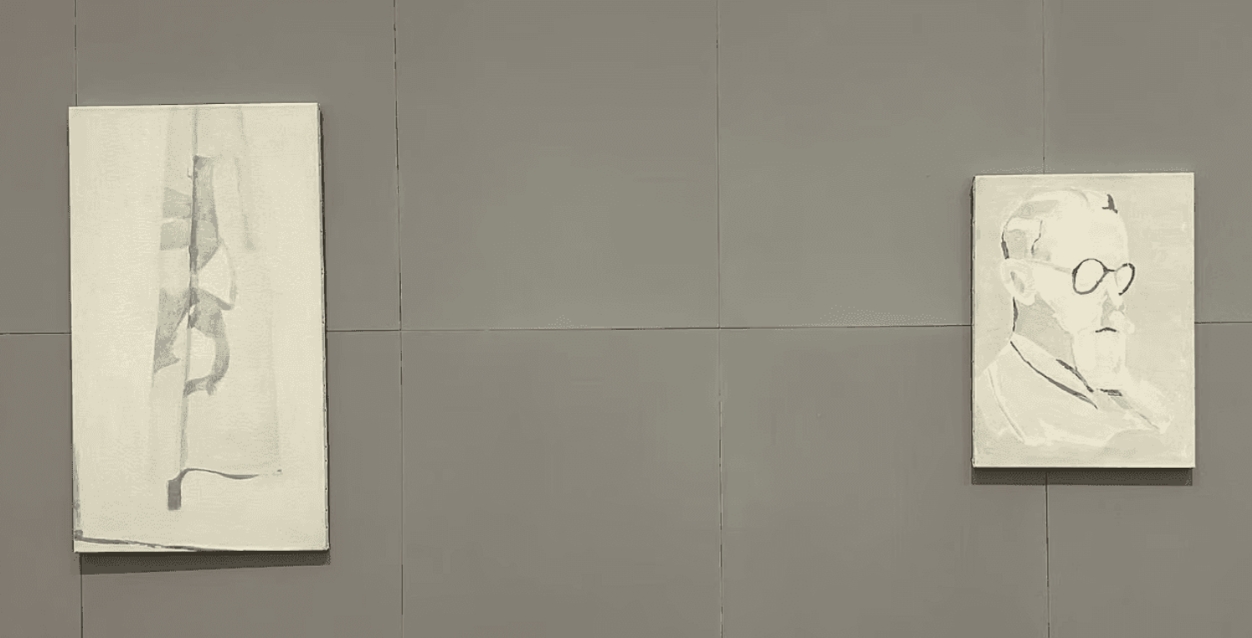
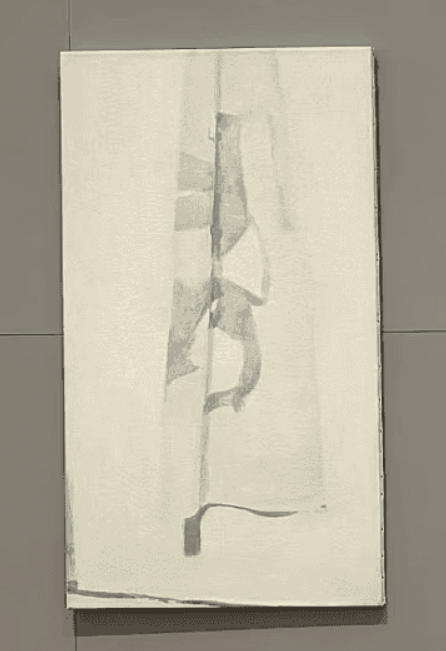
The flag, but an overexposed picture. The logo becomes a faded memory, an echo after disenchantment, a water stain left on the wall of the glass. So, when the signs and memories are no longer clear, what will the imprints left in mind represent?

Flanders Intellectuals

Flanders Intellectuals

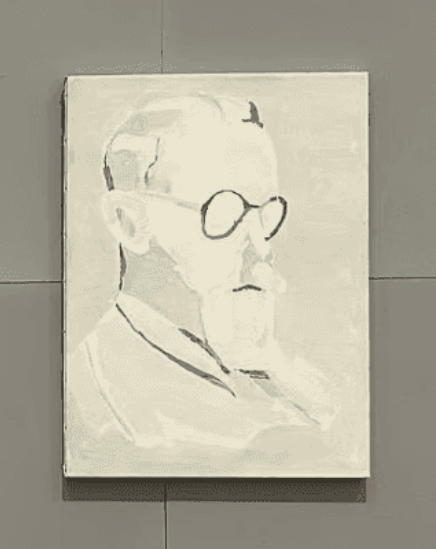
Intellectuals with the same nationality as the author. The guide explains that this is "a wipe of obsolete historical remnants, transformed into a carrier that has been manipulated and tampered with" - an extremely precise discription about "death of the author" in Roland Barthes' words. The author's opinion—details of his face—is never important; only the outline of his figure stays inside people's memory. With the same painting technique as "Flag", both are talking about the same topic: how could interpretation shape our perception for things.

Drum Kit
Drum Kit

Drum Kit

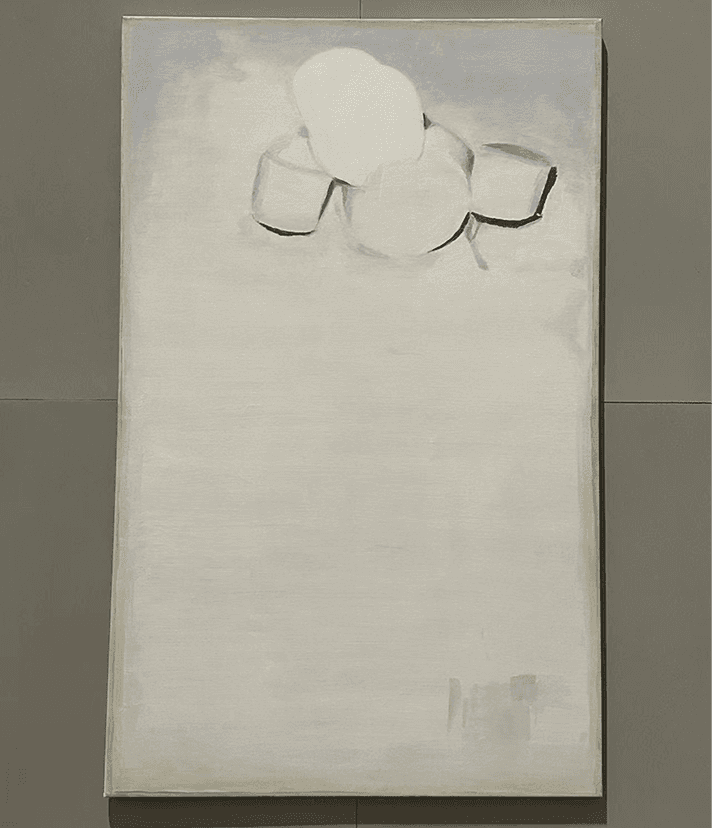
A large area of white. Just like the expression of "loud noise" in comics. Probably, it is the drum kit on top of the picture making a loud noises, overwhelming the sound of all the remaining instruments in the practice room; Or perhaps, the white space represents the piece the drum making. Since pieces played by drum kit include drum beats of the same pitch (under different rhythms), the color that represents a drum piece shall be in the same color. The huge white space and the drum surface could be blended as the same type of white without the drum kit's outline, implying the origin of the sound.

U.S. Secretary of State

U.S. Secretary of State

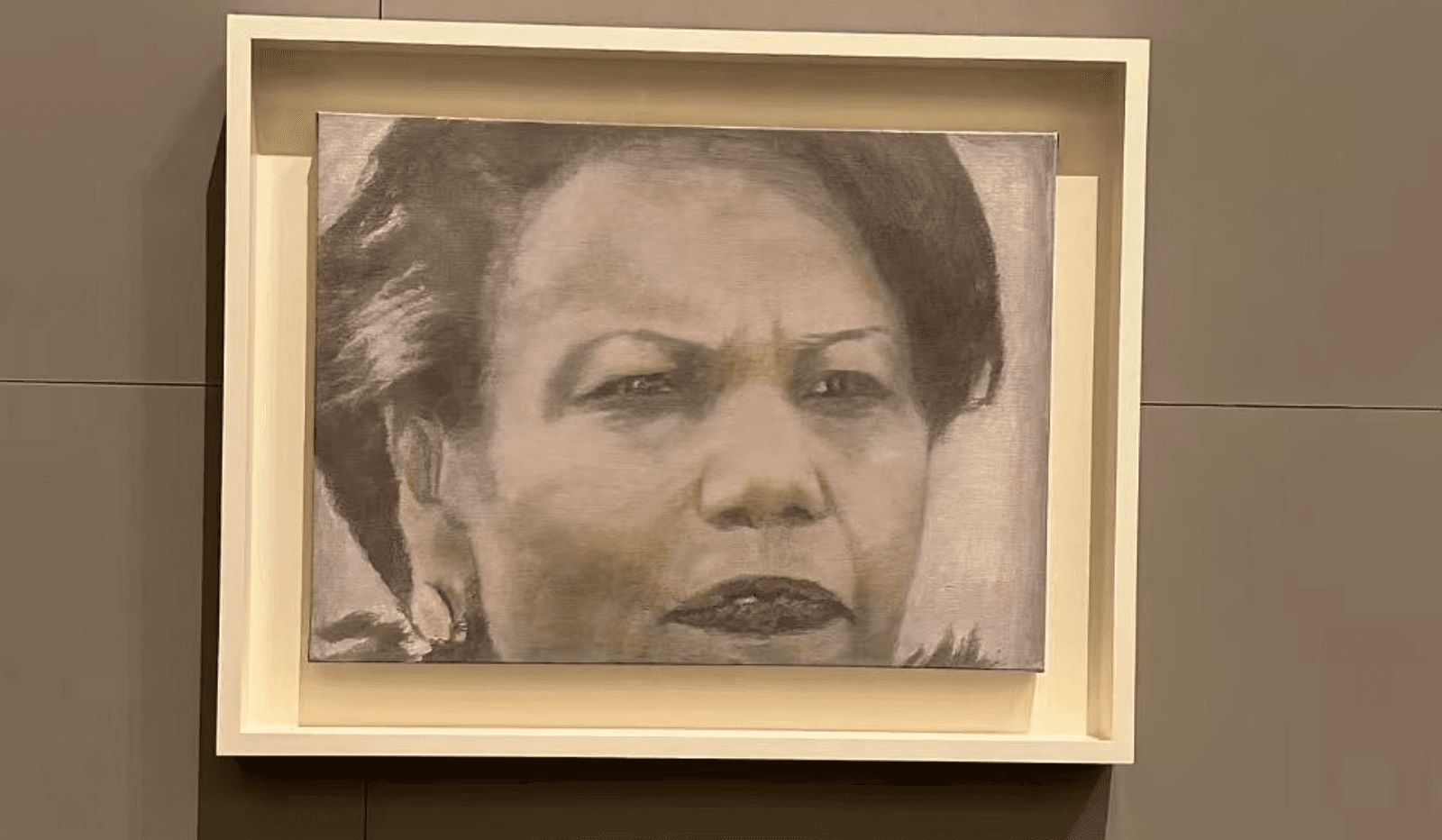
Under the strong light of the media, who can show his/her truth? It reminds me of cyberbullying of celebrities. Under countless exposures and paraphrases, they have almost no privacy. Each action would be captured, spreaded, and intepreted falsefully.

"Britney Spears is in a bad mental state!"

If you stop broadcasting her mental conditions, her mental condition will be better.

"Impropriety" series

"Impropriety" series

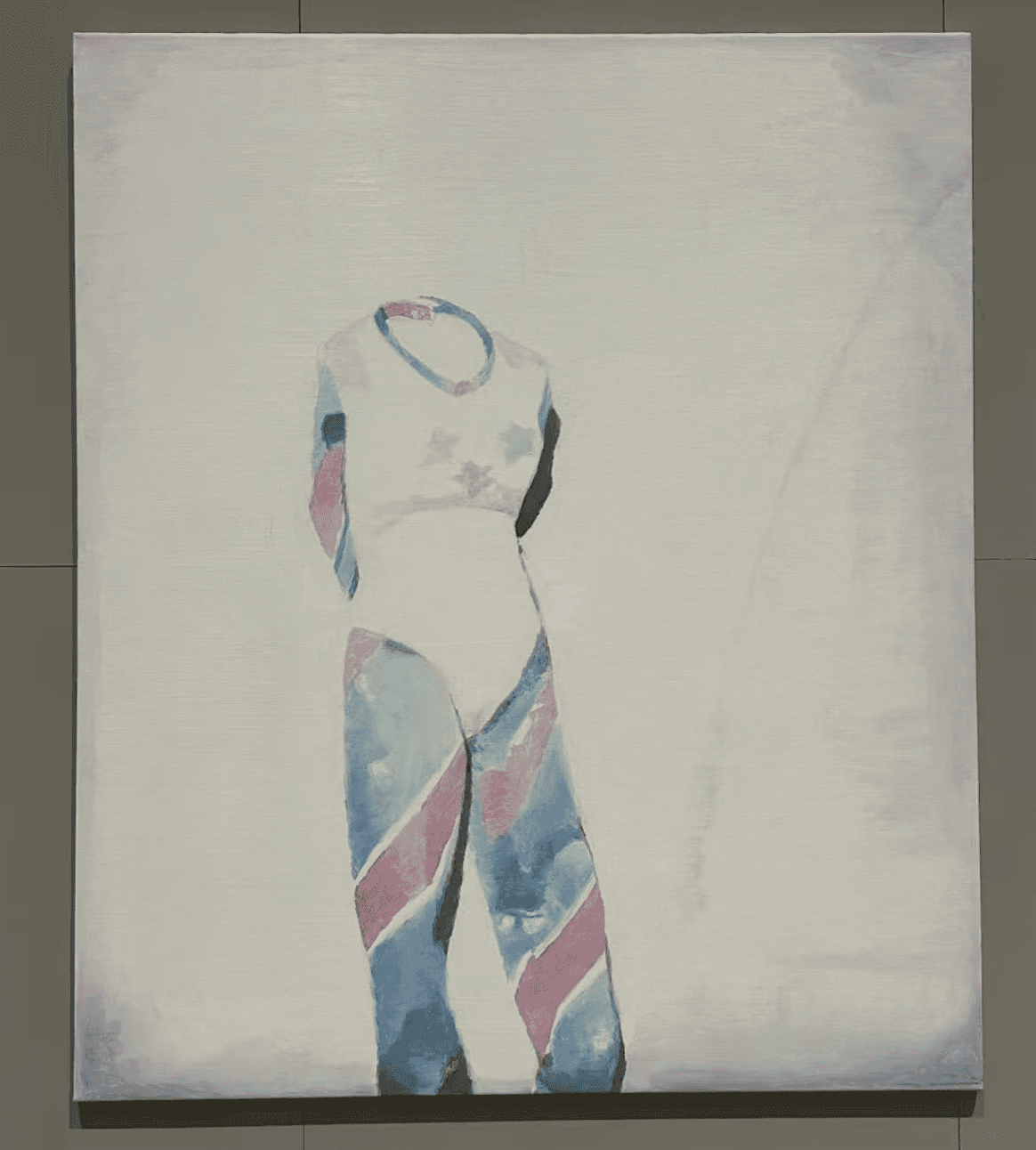
Standing sportswear without the person that wears it. In the era of rapid information dissemination, our understanding of ourselves and others' lives have become flat and fragmented. Clothes are the labels that we use to decorate ourselves and fit in the society. Under the cover, its not our individuality or characters deciding our decisions, but the aim of fitting into the society. Thus, only the clothes cover is left standing alone on the picture.

Bend Down
Bend Down

Bend Down

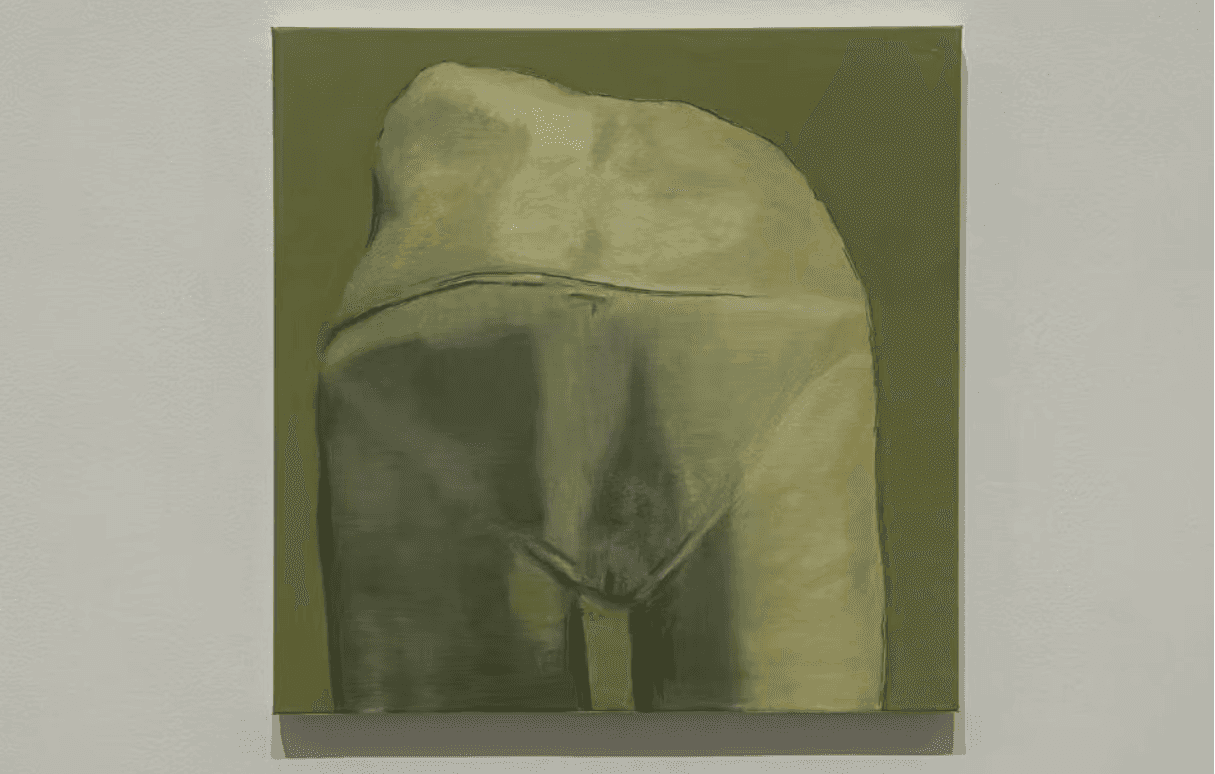
Such a precise analogy: the doctor controls the patients' body like centralist… This artist had many works depicting implicit violence: medical photographs of the human body, uneasiness in everyday life, which is probably connected to the author's experience of growing up with the elder's memories about World War II. Always describing uneasiness, always remembering trauma, but the content is vague.

Suffering
Suffering

Suffering

My Favorite. The works are arranged at the same height as the author, with an invisible spine crossing the middle, and the image resembles both withered words and people who want to melt. It is not the sadness that pierces the heart, or the anger that makes muscles shiver; it is the pain that makes the whole body paralyzed. Sad, but powerless to resist.

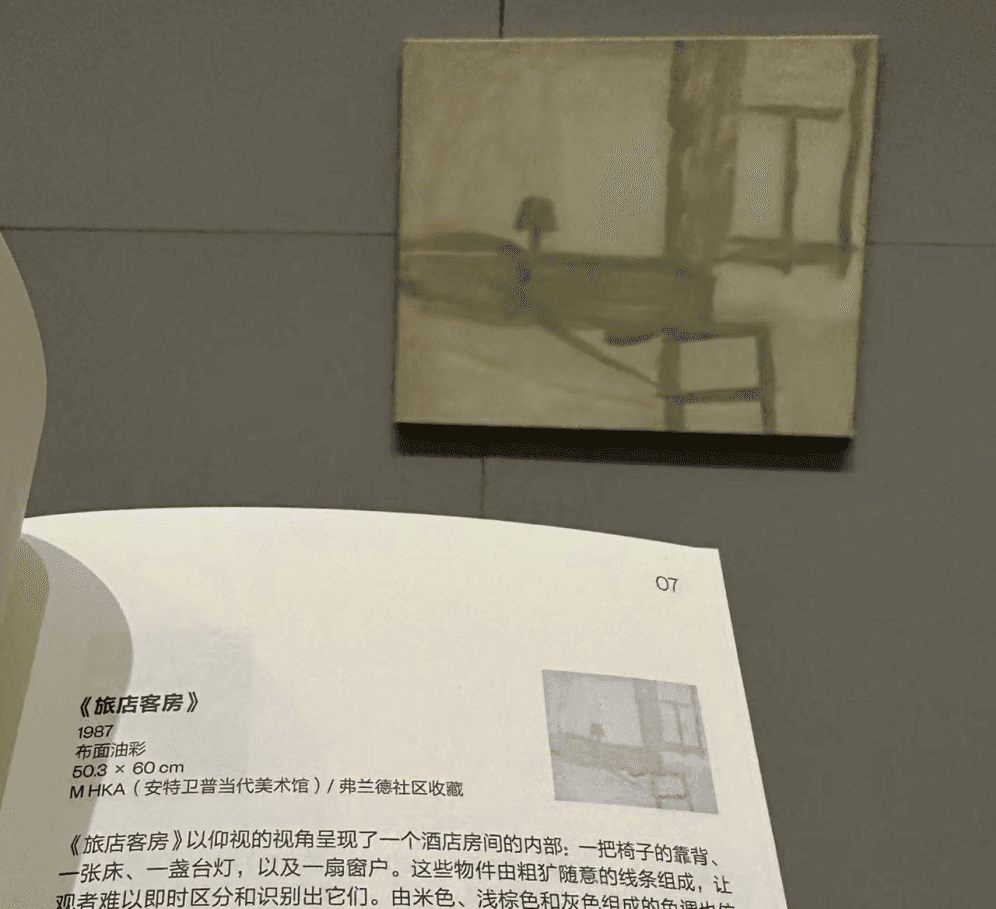
Hotel Room
Hotel Room

Hotel Room

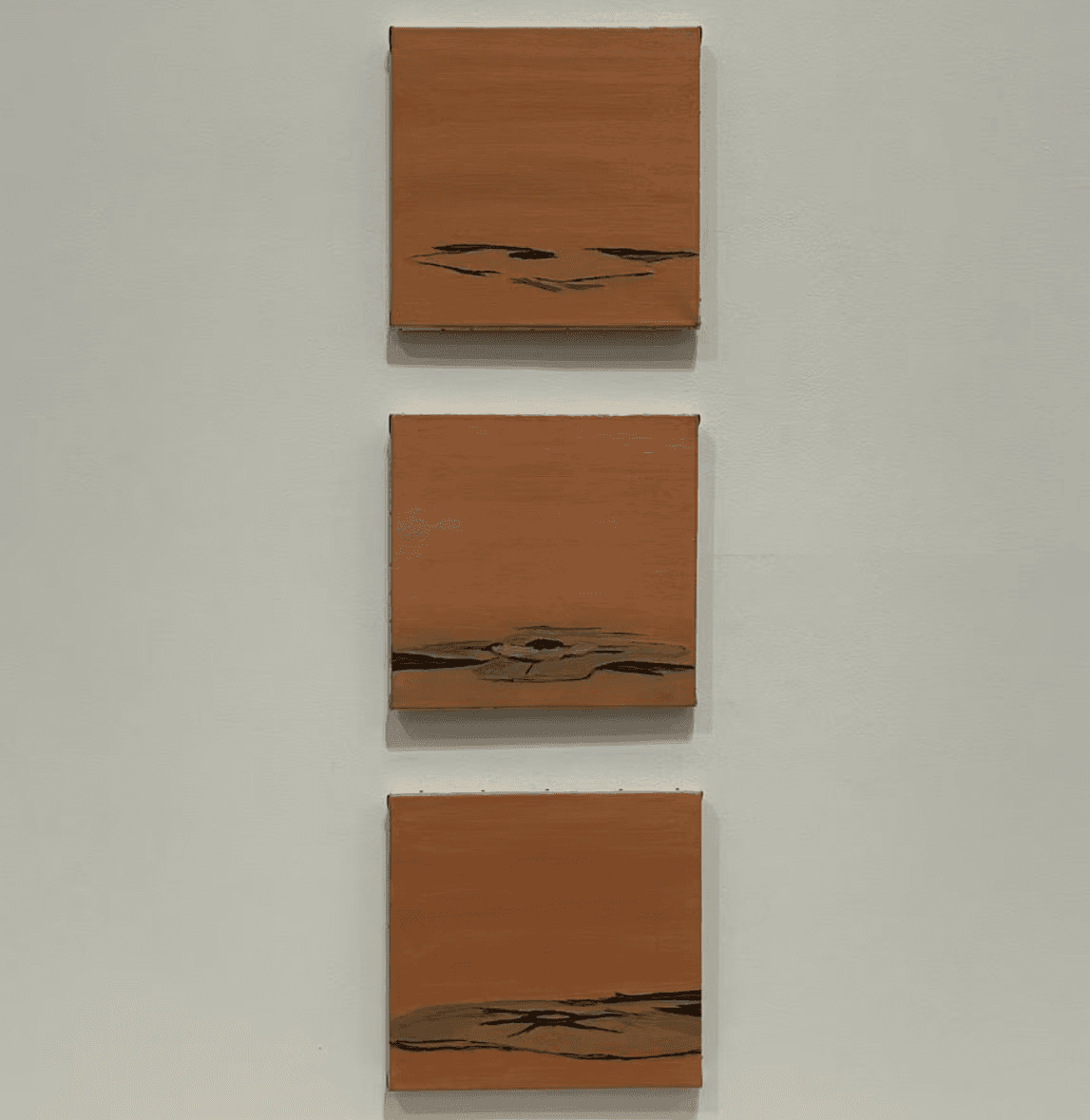
The hotel is the smallest unit of space where personal and collective memories are intertwined. How did the author think of this angle? Maybe he have watched the service staff clean up the room immediately after checking out for dozens of times in his art career. Residents spend dozens of hours in the hotel room to create their own territory in the hotel room with the most private and personal traces of "me"; However, in just ten minutes, all these traces can be erased.

Chiharu Shiota: Silent Emptiness

July 2025

Exhibition Info:

Name: Chiharu Shiota: Silent Emptiness

Location: Red Brick Art Museum

Time of visit: 07/20/2025

Duration of visit: 2h

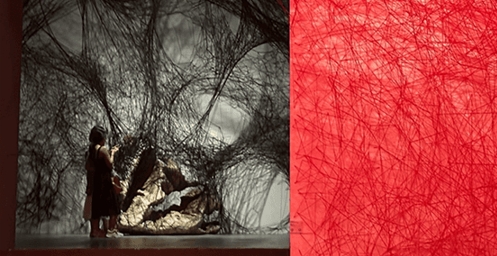
Chiharu Shiota is a renowned contemporary Japanese artist whose work stems from personal experiences or emotions and extends to universal human issues such as life, death, and identity. The giant red thread structure is her most well-known installation work, yet she had this style after discovering across diverse realms, including painting and performance art.

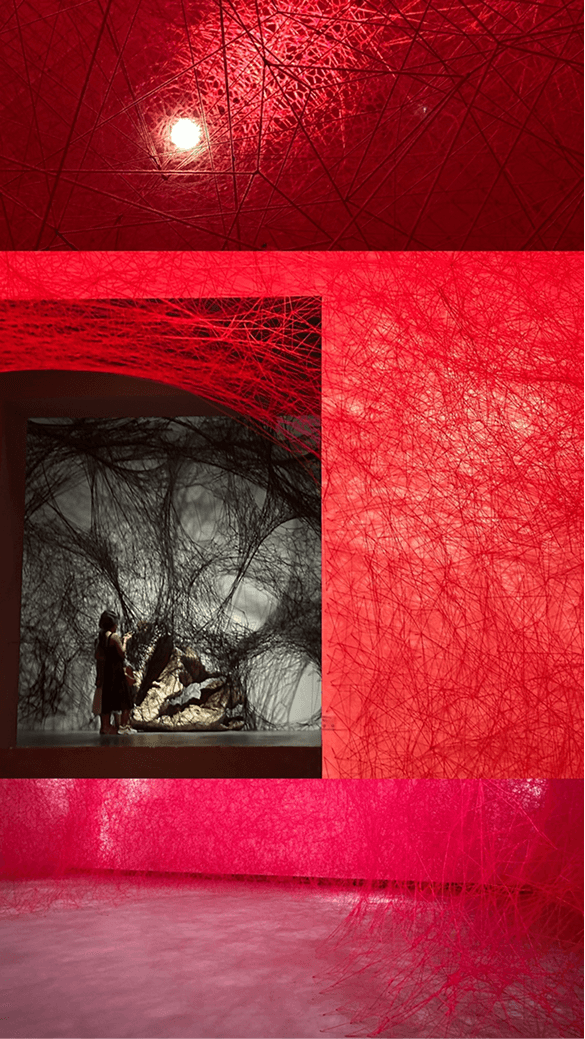
The curatorial theme is not presented with titles in each section, but it is omnipresent in the exhibition, just like the theme itself, "exhistence in absence". From her early performance art images to the installations she created in this exhibition, she continues to explore this theme. The threads carry memory and consciousness, and the imprint of time on the objects they connect reflects the theme of "existence". These objects can be the private realm "bed" in Metamorphosis of Consciousness or the natural and artificial traces of travertine in Echoes of Time (derived from waste left over from the mining of white jade), and lead to more general and profound questions. These grand contents are not directly portrayed, but are presented through the unique space woven by silk threads: in Metamorphosis of Consciousness, the silk thread with a white light ball at the end falls from the sky, making people's vision blurred, just like the author expresses the blurred boundary between life and death in sleep; The holes woven by the black silk threads leave gaps of reverie that point to more distant history and vast spaces.

The red line is about life and connection. In Rooted Memory, trees grow from the ships they themselves create, constructing a cycle of life. The red silk threads fall from the sky, and as the viewer walks through them, life seems to become a part of the red root system, integrated into this cycle of life.

The adaptability of the Red Brick Art Museum and Chiharu Shiota's works creates an immersive exhibition space. The architectural style of the museum combines Eastern Zen and Western order, with a sense of solemnity and tranquility both outside and inside. Chiharu Shiota's style expresses the core of Eastern philosophy through installation art derived from the West. In this exhibition, Shiota combines the environmental characteristics of the Red Brick Art Museum to create an installation art that is deeply linked to the exhibition space. At the ceiling of the exhibition space, the thread extends from the works and climbs out of the wall twice, linking to the next huge photograph of her artwork. The red line spans across space and time, making memories and emotions continuous.

Rooted Memory
Rooted Memory

Details in the exhibition

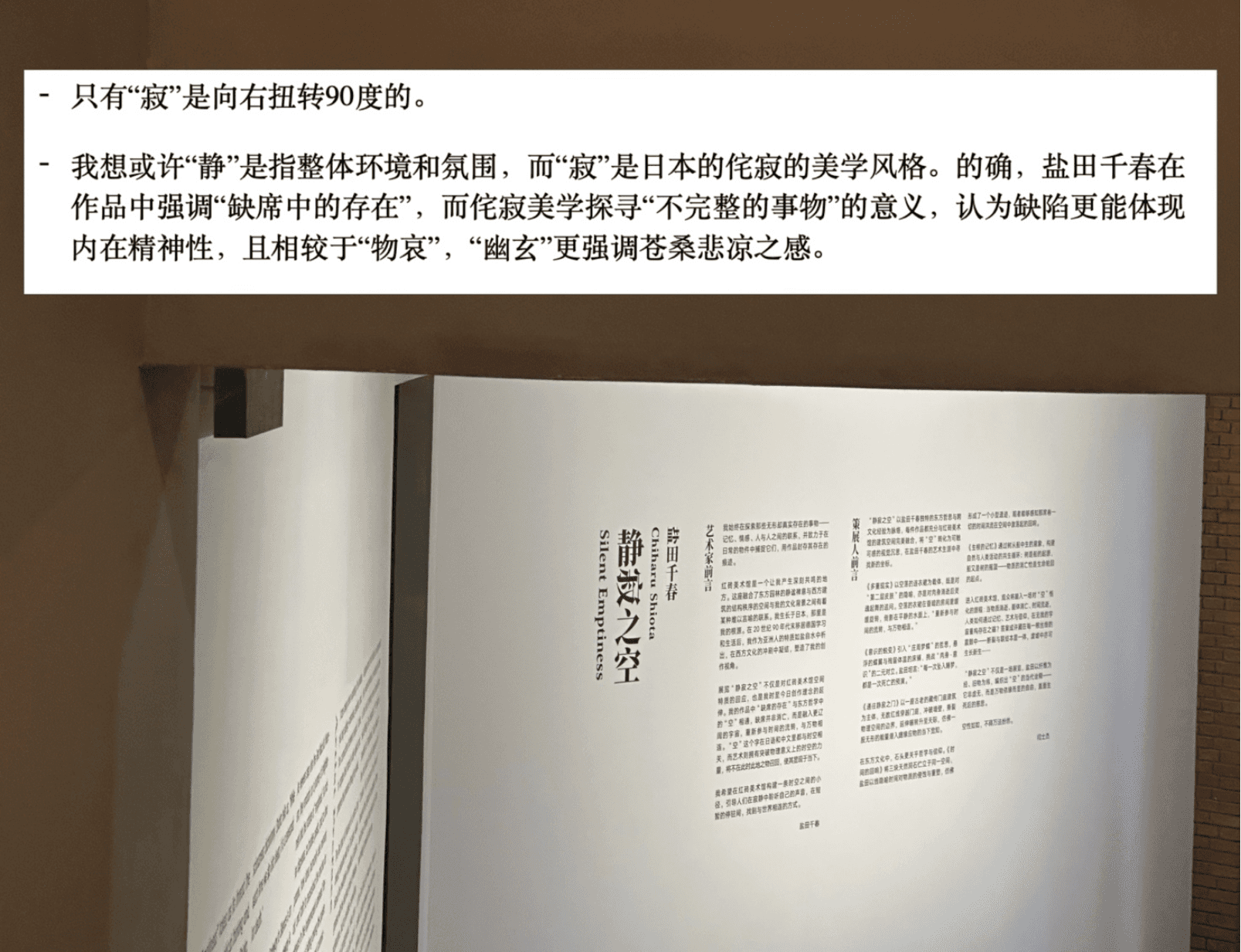
The name written in the exhibition introduction, while both "Jing ji(静寂)" refers to "silence", only the character "Ji(寂)" is rotated 90 degrees clockwise.

I think perhaps "quiet(静)" stresses the overall environment and atmosphere, while "Ji(寂)" is a paronomasia; both refer to the atmosphere and to the Japanese style wabi-sabi (Ji(寂) means sabi in Japanese). Indeed, Chiharu Shiota emphasizes "existence in absence" in his works, while wabi-sabi explores the meaning of "incomplete things", believing that defects can better reflect inner spirituality.

Silent Emptiness
Silent Emptiness

Each artwork is intepreted by Shiota herself, rather than the curator.

Rooted Memory and an interview with Chiharu Shiota himself is broadcast on the TV screen between the corridor at the end, and the exhibition brochure is also written in first-person narrative, authored by Chiharu Shiota. I really like this way of interpreting works from the artist's own perspective: explanations written by curators or critics could be unfathomable or misleading, adding another layer of mystery to modern and contemporary works that is already abstract enough. But when the narrator is changed back to the artist herself, she will tell her life experience and the philosophical thinking behind the work, leading the audience into her mental journey and creation process, and finally entering the space of the work at a reasonable pace. Rather than starting from the final work, it tries to analyze the author's original intention.

How could an exhibition finish its expression?

Traditional art belongs to the "first scene"—the place where they are created for.

Modern and contemporary art refers to paintings and installations, which belong to the exhibition hall where each moment is located.

Just as appreciating art requires going to the first scene, appreciating modern and contemporary art requires going to the exhibition hall where it is located and resonating with it.

The purpose of the exhibition is to serve the work itself and maximize the delivery of message in the work. Modern and contemporary art is all about personal expression. The author's experience and thoughts determine the content of the work, so the process of creating art is the process of expressing emotions and thoughts. Thus, to appreciate modern and contemporary art, one should first resonate with these emotions and thoughts, then learn about its theory and background. Modern and contemporary art provides a space for free understanding. In the past, art was endowed with divinity, packed with layers of interpretation, and man could not cross this divinity to reach an understanding of art. Modern and contemporary art gives people the convenience of free understanding.

The process of creation is fluid. The artist's thoughts interact with the material for structuring the final work. Therefore, the process of appreciating modern and contemporary art should also be fluid: the viewer interacts with the artwork itself through appreciation, completes their own perception, and then combines the author's intention and historical background to comprehensively understand the artwork. Artwork is not historical information and cannot be interpreted and understood by wall labels alone.

In many museums or exhibitions, wall labels and guidebooks are used to interpret the works. The author's intentions and concepts are stated from a third-party perspective, thus presenting the curatorial theme of the exhibition. Admittedly, this provides an objective perspective (meaning check); However, through these interpretations, the artwork is once again added to a layer of mystery. This distinguishes art from real life, making it distant and untouchable. For example, in the exhibition "Luc Tuymans: The Past" exhibition at UCCA Lab, the content of the exhibition guidebook is derived from this re-interpretation, and the curatorial consultant even made speculations about the purpose of his work from his life course. This process allows the interpretations carried by classical art to reappear, and it is impossible to accurately reflect the self-narrating nature of pieces in this way.

One solution is for the artist himself to tell the intention of the work. By showing the artist's intention to write the work or by showing the artist's interview video, the artwork can be presented in its original intention. For example, in Chiharu Shiota's solo exhibition: Silent Emptiness at the Red Brick Art Museum, in the penultimate exhibition hall, the TV plays interviews of the artist, introducing all the artworks presented in the exhibition. Photographs or videos of the artwork creation process and the finished product (Chiharu Shiota's early performance art videos) are presented in the video, and her creations from the past decades are shown.

Art Piece, Artist, and Art Movements

—From an individual's voice to historic eras

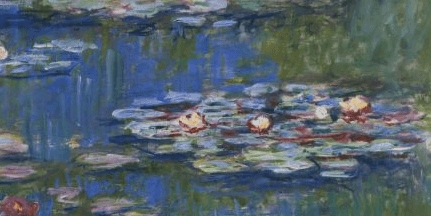
The start of modern art:Water Lilies – Claude Monet – Impressionism

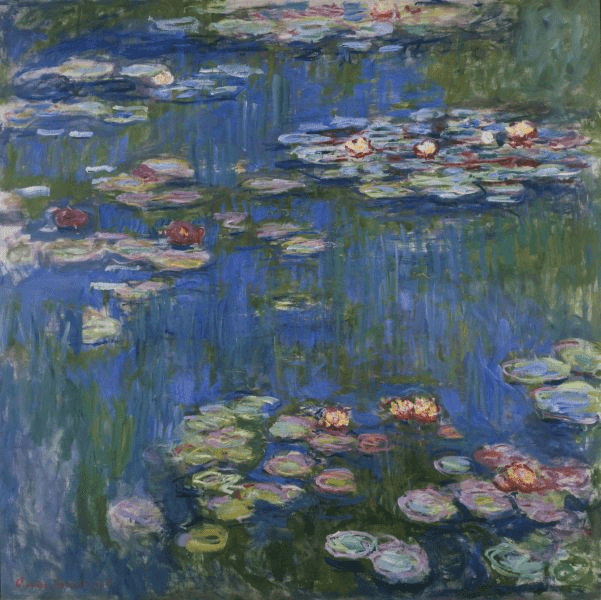
When you are far away from the painting, you can immediately recognize the content: some sort of plants in a pond (after seeing the title, you are more convinced that they are water lilies). However, when you look closely, you will find that this is not an ordinary picture of aquatic plants.

One of his "Water Lilies"

First, if you must use one color to represent the main tonis of the painting, what should it be? — Maybe you will answer: blue or purple. But green leaves also take up a lot of space in the picture, so which one is the right answer?

Second, which of these circles are water lilies, and which are the leaves? — Honestly, at least for me, it's hard to distinguish, since each circle is composed of many circles of different colors.

Third, What's the color are these lotus flowers and lotus leaves?

— This is even more difficult to answer. Although there are some light blue-violet/green colors, many of the structures are difficult to distinguish. Take a flower at the bottom of the middle as an example: cyan, green, lilac, and pale yellow, are displayed in multiple layers in one flower. How can we describe its color?

However, you are still sure that this is a picture of aquatic plants. Not because the shape of the plants in it is precise enough, but the overall color gives you the impression of a pond of water lilies. In reality, blue-purple is the color of the sky reflected in the water in the evening, dark green is the reed, and the lilies and leaves will gather on the surface of the pond in the form of small piles, forming the markings we see in the picture. So, why are the colors of lilies and leaves shown in such a complex way? — Combined with our previous inference, the artist made this painting in the evening, when the sky color changes the fastest. As a result, extremely complex colors appear on plants, reflecting the color of the sky.

At this point, the characteristics of the painting emerge: 1. it captures the scene in the natural environment, 2. it does not seek an accurate portrayal of details, and 3. it faithfully captures the changes in light that can be seen with the naked eye. And because of this, even without an accurate depiction of details, the viewer can still realize that this is a depiction of water lilies.

This is exactly one of the 250 water lily paintings painted by the most famous impressionist artist, Oscar-Claude Monet, and it is also Monet's lifelong artistic pursuit - to "faithfully capture and record the changes in light in the natural environment". This was also a common goal of Impressionist painters. That's all for an introduction to Impressionism: Now, you can find a few more works by Impressionists to verify this commonality. If you want to delve into why they painted the way they did, this is about the historical context, and you can start reading.

Into the Spiritual Realm: Composition Series – Wassily Kandinsky – Abstractionism

When it comes to painting in modern art, abstractionism is perhaps the most incomprehensible school: are these works randomly applied or carefully designed? What does the constant splicing and recombination of geometric shapes describe? In fact, in terms of the purpose of abstraction, its content is closest to the essence of art. Their theories may be very jerky; however, only by analyzing the picture itself can one touch on many questions about the "essence of art" about what they are trying to do. By appreciating some of the works of the "father of abstraction", the artist Wassily Kandinsky, we can form a preliminary understanding of abstraction.

1)

Composition VII
Composition VII

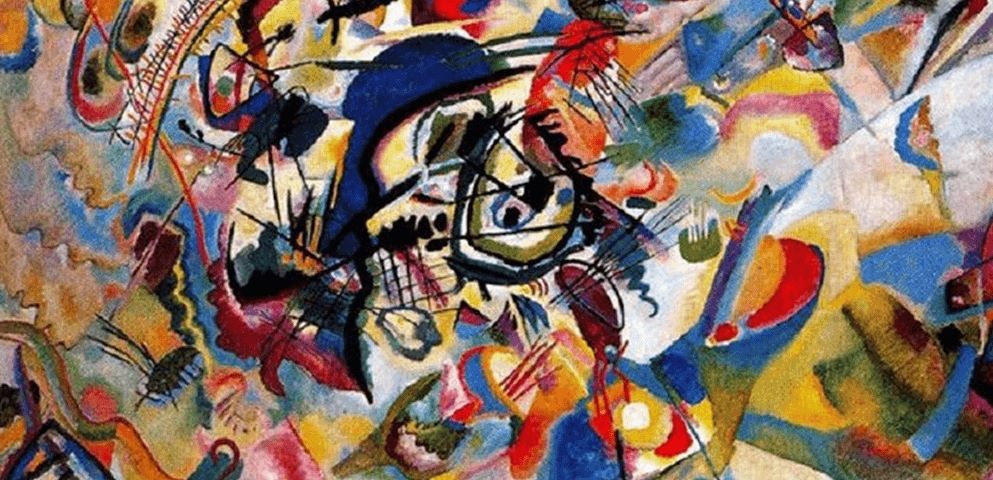
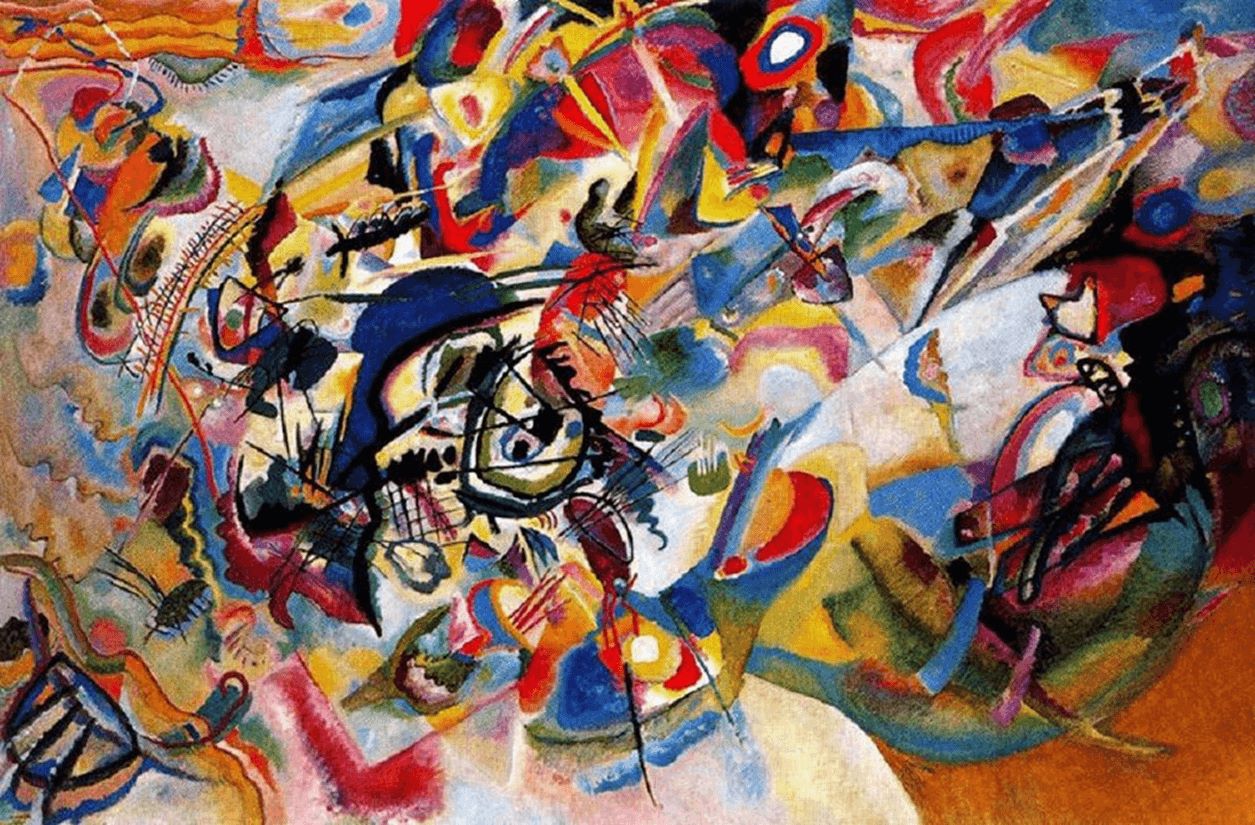
What was your first impression when you saw this painting? Maybe the same as me – noisy, chaotic, without regularity. However, you may take it as a random application of various colors and feel curious about how this is done at the same time: the use of color and line is extremely complex: crayon-like lines, light smudges, thicker blends between colors, thick blocks, all kinds of shapes, and combinations of them. This is definitely not an ordinary "random sketch", but there is a certain plan and operation.

However, if you look closely at these color blocks, can you find a certain pattern? When I observe, I found that the colors on the left side of the picture were more complex, with denser lines and color blocks, and lighter colors. The color block on the right side is larger and darker; There is an area in the middle where a lot of colors and lines are clearly gathered. Can we think of it as the visual center of gravity of the painting? Is it dense in a specific form? In my observation, I gradually discovered the snail-shell-like "subject" in the picture: starting from the orange-red color in the lower right corner, a wave of color gushed out, surged upwards, and then fell inward. This stream contains various circles, irregular shapes twisted based on rectangles and triangles, black and other colored lines. This stream is not a closed snail shell: it pours into the more complex background on the left, blending with the lines and colors on the left.

Color blocks are stacked on top of each other, crowding forward, and noisy sounds are pouring out from them. The diverse colors give this sound a different rhythm, as if different voices are shouting. Compared with pure paintings, the design carried by this picture gives people a musical atmosphere. Each color represents a sound—a person, or a musical instrument; They mingle together and result in a majestic episode.

This Composition No. 7 is the largest work of art by Wassily Kandinsky, measuring 200cm*300cm (perhaps imagine how shocking it would be if it were placed in front of you). It is considered Kandinsky's pinnacle before WWI. Indeed, compared to his previous compositional series, this one uses the most colors, the most complex construction. There are more than 30 watercolors and oil sketches that set the stage for this work, but the composition took only 4 days. The artist insists on not having any material source of subject matter or form at the beginning of his creation. This echoes with "inner inevitability" he mentioned in "Concerning the Spirit of Art": in the book, he argues that art should express the spirit, not imitate the outside world. This abstract work, which makes up 7 and the same series, is his attempt to express his inner spiritual world.

Kandinsky is an artist who started halfway. At the age of 30, he gave up his teaching position in law and economics and went to the Academy of Arts in Munich. His artistic journey was caused by music. Kandinsky said he had synaesthesia: when he listened to a symphony, colors came to his mind, and color was the way he used to describe music. In "Spirit in Art", he pointed out that music and art can be related in the human mind: "Color is the key, the eye is the hammer, the heart is a piano with many strings, and the artist is the hand that plays the piano." He believed that great art and music should capture the personality of the artist and the characteristics of their time, and express the human spirit in this way. In "See What You're Missing: 31 Ways Artists Notice the World — and How You Can Too", Will Gompertz points out that Kandinsky taught people how to see with their eyes and ears at the same time, and it can be said that he was creating a more comprehensive and immersive spiritual experience with abstraction.

2)

(The following text can only be used as an idea to understand abstraction, but cannot be used as a strict reference)

How can you learn about a chocolate peanut-flavored Magnum?

We can describe its appearance, observe its external shape; You can also write the ingredient list on its plastic packaging. But if we want to get to know it in more depth, we may have to take a bite of its chocolate crust, feel the chocolate crisp and peanut's taste, and then eat it layer by layer until we fully understand its structure, taste, and even evaluate it.

We'll see the Magnum first and then eat it, and in the process of eating, we develop a deeper understanding of the Magnum. We taste the layers of ingredients in Magnum and feel its rich taste. What if you compare the process of appreciating "Composition 7" with the process of eating a Magnum? When we resonate with Composition 7, we stop in front of the work and observe and analyze it more closely until our thoughts fully enter the picture. Only by eating the Magnum layer by layer can we achieve a very comprehensive understanding of the Magnum; In the same way, the analysis of elements in art can lead to the internal rhythm of the artwork, such as the analysis of the visual elements in the picture in the previous article, which gradually makes people feel the internal logic of the work.

Perhaps the answer is: points, lines, surfaces, colors, and compositions.

Architecture is related to practical purposes, so scientific knowledge is its premise. Music has long had its own theory. For painters, the analysis of these elements will build the basic framework of art.

The words above is my attempt to transform the description of art science in the introduction of "Point and Line to Plane" into the most popular explanation. After the outbreak of World War I, Kandinsky returned to Russia and was invited to join the Bauhaus in 1922. He began to delve into the elements of art, and the artistic style also underwent a dramatic transformation: from active colors to precise geometric shapes and lines. In the subsequent three chapters, "Point", "Line", and "Plane", Kandinsky analyzes the functions and applications of these three basic elements in painting in great detail. These theories are not important in themselves, but by relating them to a work by Kandinsky of the same period, we can gain a deeper understanding of how he created these abstractions.

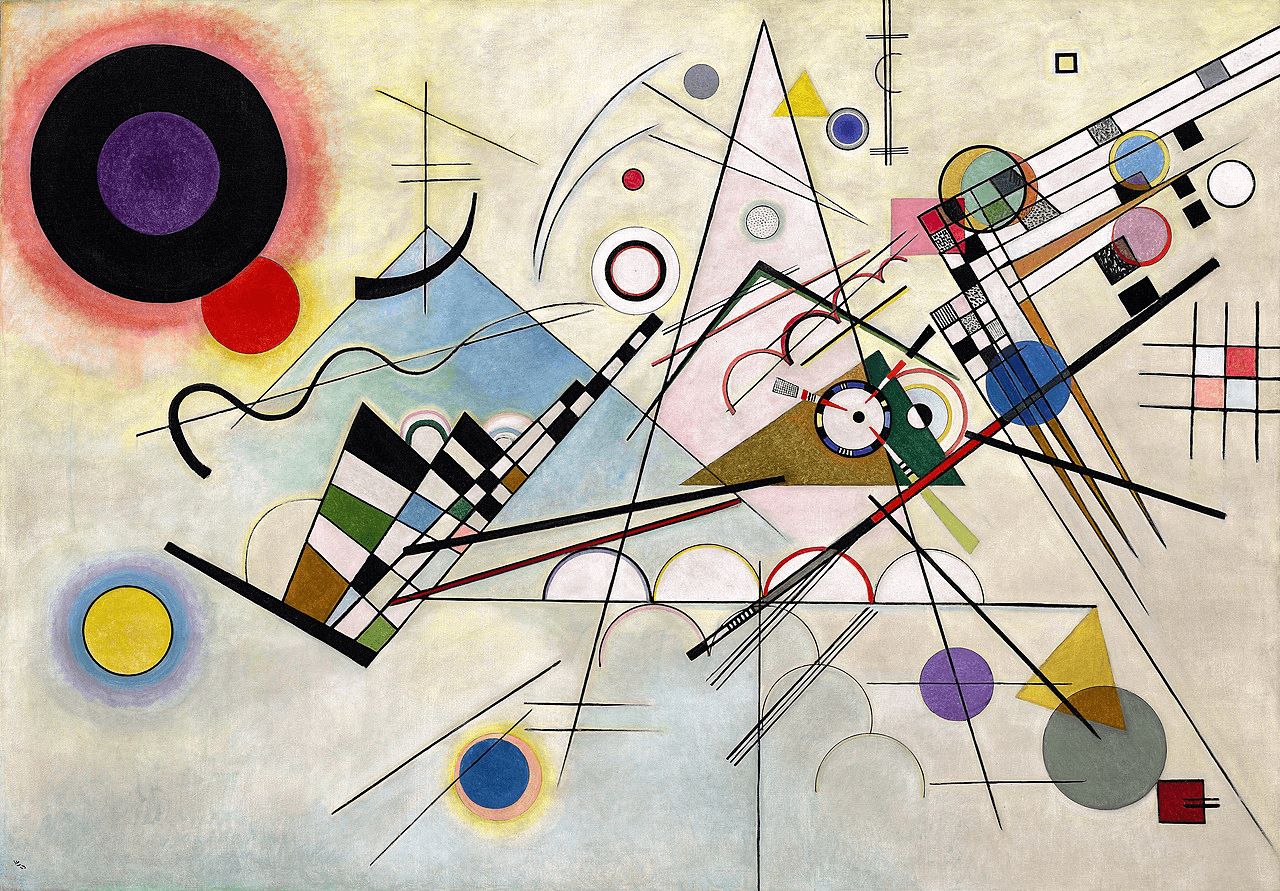
Composition VIII
Composition VIII

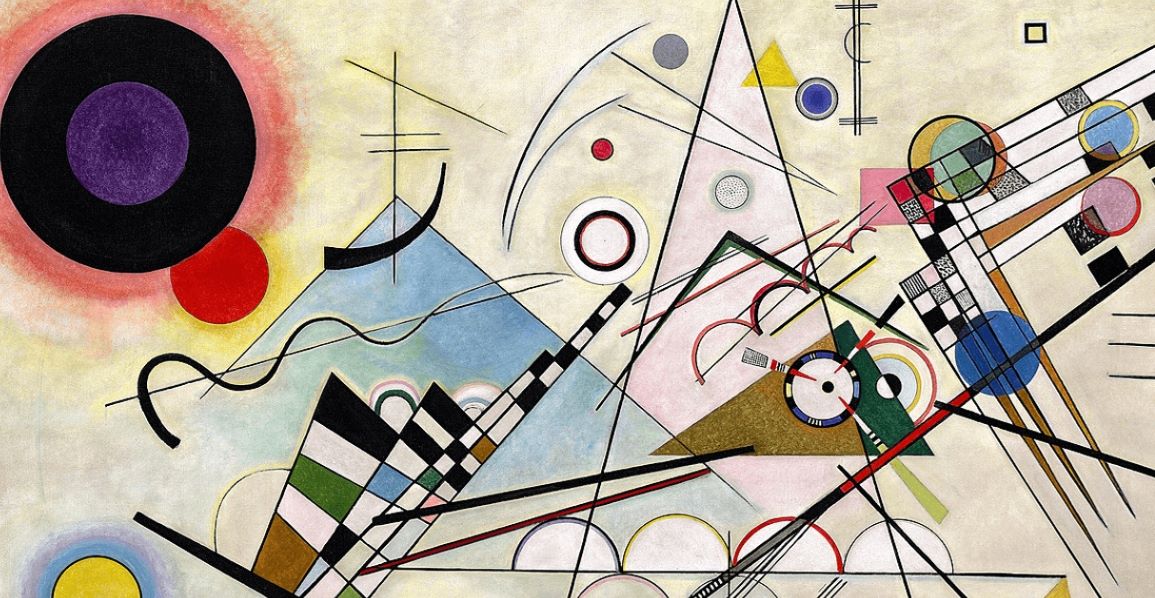
Take "Component 8" as an example. What do you see in this work—one of Kandinsky's most famous works? What points, lines, and planes are included in this painting?

Perhaps there is only one point—the black dot inside the circle in the middle of the triangle on the right side of the center, and there are three very thin triangles pointing to this point. The rest are circles, and Kandinsky painted all kinds of circles: solid circles, circles with thicker outlines, from solid circles to surrounding circles, etc. In fact, in "Points, Lines, and Planes", they are closer to Kandinsky's definition of "points": not in the center, but separated from each other, many centrifugal points. At this point, the "duality of sound" appears: the absolute sound of the dot itself, the moment a colored dot appears on the picture; And where its sound is on the picture, they move closer from the edges inward or are scattered in different places. If you think of them as sounds, what may appear at this time is a jingling sound, like the music of a piano.

Then there are a large number of lines in the picture. Dense parallel lines, lines perpendicular to each other, lines that intersect vertically, lines that are not parallel but have not yet intersected...... They are not focused in the center of the picture; they are centrifugal lines. Kandinsky believed that the relationship between centrifugal lines and the picture was relatively loose, so he abandoned the still element. By analogy with sound, I think the accumulation of each line is like a moment when a violin is quickly pulled up. The two sharp corners in the center are not part of the triangle, but curves formed under the "two alternating forces". In the chapter "Line", Kandinsky points out that right angles represent justice, cold and repressed, and sharp angles represent sharpness and high activity, so the two sharp corners in the picture - the blue one on the left is close to the right angle, and the right one is a typical sharp angle - may be the combination of the painter's "sharp and highly active" inner state and his "cold and suppressed [state] skillful technique". In addition, there are a large number of semicircles or arcs in the painting. This arc is formed by "two forces acting at the same time". There are only two curves in the picture - the curve from the left, the former is more irregular and arbitrary, and the latter is less tense.

From the overall layout of the picture, the elements in the upper half are denser and the colors are more complex; The lower half has less space and fewer elements. This is closer to what the author considers to be a state of "equilibrium": in the freer upper part, the weight of individual elements is reduced, but the density is greater; And in the denser, heavier lower part, the movement of the elements is no longer free, and the movement is restrained.

In fact, at this point, even without delving into his theory, the reasons why Kandinsky became the father of abstraction gradually became clear: the visual elements he used had certain regularities and were highly variable, and there were many different ways to combine similar elements. There are a large number of short lines, long lines, colored dots, squares, very thin triangles, arcs, and curves, but the overall picture has some hidden patterns rather than being purely chaotic. In fact, these visual elements are complex enough to create a mess by themselves without any arrangement. Real casual painting couldn't present neither such diverse elements but are internally connected visual elements nor such coordinated, rich, and harmonious content. However, through his arrangement of things, these elements are placed very freely and arbitrarily peacefully. The laws implied in these complex contents explain why his abstract art has become a system. When analyzing these elements that have nothing to do with real life, people can enter areas that have nothing to do with the figurative world, so as to gain spiritual relaxation.

Of course, not everyone can appreciate the charm of abstract art, just as not everyone will like a writer's style - or, as the saying goes, the difference in aesthetic taste is not equal to aesthetic levels. These explanations could be a way of trying to understand abstract art, and it can also be a way to keep people who don't like abstract art away from it. However, whether we like it or not, this process of careful observation and the discovery of the inner laws beneath every seemingly irrational appearance is always extremely necessary.

It is the ability to see and perceive.
The comparison between Kandinsky and Malevich's abstract art expression

Abstract art uses colors, shapes, and lines to create compositions that are independent from references in the real world. The history of abstract art dates back to the birth of Cubism and Fauvism. Alfred H. Barr Jr. distinguished two main trends in abstract art in his book Cubism and Abstract Art: the geometrical, structural current as it developed in Cubism and later in Constructivism and Mondrian, and the intuitional, decorative current through Kandinsky and later Surrealism [1]. As a pioneer of Suprematism, which originated from the Russian avant-garde movement along with Constructivism, Kazimir Malevich's artwork should be listed in the first category; however, he aims to use his creations to lead people to discover things beyond cognition, which could be shown especially in his oil painting Black Square. This goal has some coincidence with Kandinsky's attempt to connect the audience with pure, abstract music. In this essay, the author will use specific artworks to analyze the differences and similarities between Kandinsky and Malevich's artistic attempts to achieve abstraction.

Being inspired by the epic tenth-century tale by Wagner, the composer who raised the idea of Gesamtkunstwerk, Wassily Kandinsky aims to create music within his artwork. According to him, he had sensed the colors expanding in front of his eyes when he was listening to Wagner's music[2]. Later, he devoted himself to painting a series of Improvisation pictures. He aimed to create a visual soundscape that enabled the audience to hear the "inner sound" of color. Kandinsky believes that our soul is suppressed by the reign of materialism, and modern art, as the art form that is produced in the particularly modern age, would be a way to help people turn to their true inner self and be released from the unrealized suppression [3]. Kandinsky believes colors inside the painting could bring the audience a special spiritual effect. The audience will generally have two effects. First, the eye would be charmed by the beauty and other qualities of the color. Although the psychic experience is superficial, it could develop into a deeper form of experience, and here comes the connection between painting and music [4]. Kandinsky believes: "The constantly growing awareness of the qualities of different objects[in the painting] and beings is only possible given a high level of development in the individual. With further development, these objects and beings take on an inner value, eventually an inner sound.[5]"At the second step, the color would strike psychological effect and make the colors reach the soul. "In general, therefore, color is a means of exerting a direct influence upon the soul. Color is the keyboard. The eye is the hammer. The soul is the piano, with its many strings.[6]"

The Improvisation series includes Kandinsky's visual creations of the painting. He used random, relaxing lines and color blocks to depict his understanding of music pieces, hoping the audience could understand. In Improvisation VII, Kandinsky filled the canvas with colors and lines. The artwork was completely abstract, without any reference to real life. However, under the complete chaos, people could sense the rhythm underlying its surface: the place where shapes and lines accumulate forms a swirl, growing from the right side of the canvas; the space beside the swirl is filled with colors, too, but shallow and blurry, creating a sense of space. At the left side, it seems like the shapes and lines are flooding out of the swirl-like sack and fading into the fog at the left end. An abundance of colors is displayed on the canvas, like the ambitious members going on a vigorous campaign, but each following an unspoken order without crowding together. The audience would feel the huge noise emanating from the canvas without hearing any actual sound. Kandinsky imagined the audience's potential reaction: the bright lemon yellow hurts the eye, just like how a high note on the trumpet hurts the ear[7].

When Kandinsky returned to Moscow after WWI, his style underwent changes showing the influence of Russian avant-garde artists. Being influenced by Suprematism and Constructivism, he included more aspects of the geometrizing trend in his artworks. Later, in Bauhaus, he furthered his investigation of colors and forms with the Composition series. In Composition 8, straight, thin lines and regular geometric shapes dominated the canvas. Several circles that could only be made by the bow compass were scattered to different places on the canvas. Kandinsky himself believes the importance of circles in this painting prefigures the dominant role they would play in many of his subsequent pictures. "The circle is the synthesis of the greatest oppositions. It combines the concentric and the eccentric in a single form and in equilibrium. Of the three primary forms, it points most clearly to the fourth dimension."[8]Whether the audience could understand his effort or not, his pursuit of total abstraction has come to a milestone. The audience's natural inclination to decipher the content in any way is thwarted by his shapes and lines, prompting them to turn inward for reflection.

After a few years of Kandinsky declaring his artistic pursuit, Malevich announced the establishment of Suprematism. The aim of Kazimir Malevich's composition could be summarized with the first sentence of his manifesto From Cubism and Futurism to Suprematism: The New Realism in Painting: "Only with the disappearance of a habit of mind which sees in pictures little corners of nature, madonnas and shameless Venuses, shall we witness a work of pure, living art.[9]" To achieve his goal, he chose to eliminate all visual elements that refer to objects in real life.

According to Malevich, the first attempt at art laid the basis for conscious imitation of nature. The artist of collective art, the art of copying, has only developed his art on the side of nature's creation, not the side of new art. He believed such a concept of art is false. The modern movements "cast off the robes of the past and came out into contemporary life to find a new beauty". He firmly pointed out: artists become creators only when forms in their work have nothing in common with nature. colors and texture are ends in themselves, and their essence is always destroyed by the subject[10]. In Futurist paintings, faces are painted green or red. But only when the faces painted green and red to an extent that kills the subject could the painting live [11]. Thus, pure colors and shapes became his artistic expression.

His seemingly most extreme attempt, also the first attempt of Suprematism, Black Square, illustrates how he reduced everything to nothing[12]. The design was created as the background design in a Futurist opera, Victory over the Sun. However, Malevich gradually discovered the importance and meaning of this abstract black square, so he created the artwork Black Square in 1915 as the manifesto of Suprematism [13]. The content of the painting was simple: a black square at the very center of a white square canvas. However, Malevich's intuition is not: He wanted the audience to focus on the form of the black square, think about the relationship between white and black color, enjoy the texture of color, and even feel a sense of movement in this absolutely motionless painting[14]. He assumed that when people look at the square, even though no inference to the real world is shown on the artwork, the audience would still try to interpret the artwork, and their subconsciousness could take place during this mentally wandering journey[15].

However, the development of Suprematism didn't come to an end after Malevich's pure color creations. His painting Suprematism in 1915 was another attempt of pure art, but this time, the canvas is filled with shapes with different colors. The black, irregular shape that is consisted of several rectangles lied in the middle. A thin, straight line run across the black shape, stretching to the upper left corner and the lower right part of the canvas. Plenty of shapes are laying on the line. Rectangles crisscross each other in an irregular way. Irregular, random rectangle clusters are placed at the lower left and right corners, also some places at the left side and the right side. Shapes with curves are few, scattering in some places on the canvas. Clearly, the artist is not conveying any message through the shapes. There are pure shapes and colors, pointing to the nonobjective world, leading the audience to the ultimate artistic journey. The constructions that comprise the composition of the picture personify the artist's concept of the universe. Since the artwork does not have a top or bottom, the artist creates a new reality on his canvas [16]. In this painting, Malevich led another spiritual journey through colors. He uses the colors to create an imaginative space, but the space itself could only be created inside the audience's heart. Again, the colors and textures became "ends in themselves"[17].

From the analysis above, we could roughly conclude their difference and similarities in their artistic pursuit. Kandinsky wanted the audience to use different senses to appreciate his work. Malevich required the audience to wander in his pure colors using subconsciousness, rather reaction towards visual stimulation. While Kandinsky turned to another art form relating to abstraction, Malevich delved into the abstraction within visual art itself. However, both attempts aimed to lead an inner way of perceiving beyond pure visual perception. Kandinsky attempted to evoke different senses through art that could only be directly perceived by vision. Malevich stepped further, giving up all sensual perception, and turned to pure mental experience. Besides, both artists highly require the in-depth interaction between the audience and the painting. In their imagination, the audience would keep trying to wander inside the artwork, until their inner sense function without even knowing it.

[1] Taylor & Francis Group, abstract from Alfred H. Barr, Jr. Cubism and Abstract Art, https://www.taylorfrancis.com/books/mono/10.4324/9780429059148/cubism-abstract-art-alfred-barr-jr

[2] Will Gompertz, 150 Years of Modern Art in the Blink of an Eye, USA: Penguin Group, 2013, p.655

[3] Wassily Kandinsky, Concerning the Spiritual in Art Theory 1900-2000, ed. Harrison & Wood, 2003, originally written in 1912, p.83

[4] Kandinsky, Concerning the Spiritual, 87

[5] Ibid., 88

[6] Ibid., 89

[7] Kandinsky, Concerning the Spiritual, 88

[8] Wassily Kandinsky Composition 8(Komposition 8), Guggenheim Museum, https://www.guggenheim.org/artwork/1924

[9] Kasimir Malevich, From Cubism and Futurism to Suprematism: The New Realism in Painting in Art Theory 1900-2000, ed. Harrison & Wood, 2003, originally written in 1916, p.173

[10] Malevich, From Cubism and Futurism to Suprematism: The New Realism in Painting, p.174-175

[11] Malevich, From Cubism and Futurism to Suprematism: The New Realism in Painting, p.179

[12] Will Gompertz, 150 Years of Modern Art in the Blink of an Eye, USA: Penguin Group, 2013, p.517

[13] Gompertz, 2013, p.514-517

[14] Gompertz, 2013, 518

[15] Ibid., 520-521

[16] The State Russian Museum, Suprematism, Google Arts & Culture, https://artsandculture.google.com/asset/suprematism/7gFr9friECE5NA , accessed June 3, 2025

[17] Malevich, From Cubism and Futurism to Suprematism: The New Realism in Painting, 175

放大图片